AC blowing warm air? Start here.
Air is moving, but your home isn’t getting cooler. That tells us there’s a problem—not which part has failed.
Thermostat settings, restricted airflow, and cooling-system faults can all be involved. Start with the safe checks below. If cooling still isn’t working, we’ll help you understand why. [1]
A guide for homeowners—not instructions for opening equipment or making electrical or refrigerant repairs.
Four checks. No equipment panels to open.
If there’s no emergency, start here. Skip anything you cannot safely access or aren’t comfortable doing. You don’t have to complete a checklist to call us.
Check the mode and fan setting.
Select COOL and a set temperature below the room temperature. Check for a schedule overriding the setting. With the fan set to ON, room-temperature air can circulate between cooling cycles; use AUTO for this check. [3]
Look at the filter you normally change.
Switch the equipment off and follow its instructions. Replace a dirty disposable filter with the specified size and type. Don’t remove service panels to find one, and don’t run the system without its filter. A clogged filter restricts airflow. [1][5]
Check for blocked vents and returns.
Move furniture or rugs covering the grilles. Notice whether airflow feels weak everywhere or only in one room. Don’t open ducts or adjust internal dampers. Unobstructed air paths matter to cooling performance. [5][6]
Look from a safe distance.
Notice whether the outdoor unit appears to run and whether vegetation or debris covers its sides. Don’t remove the grille, reach near a fan, or touch wiring. A dirty outdoor coil can interfere with releasing heat. [1][5]
Still blowing warm air after the simple checks? Turn cooling off at the thermostat and arrange a diagnosis instead of repeatedly restarting it. [1] Tell us what you noticed; there’s no need to do more testing yourself.
Arrange a diagnosisThe fan is only part of the system.
The blower moves air. Refrigerant and the compressor are part of the process that moves heat outside. A fan running does not prove that the cooling process is working. [9]
Air isn’t moving as it should.
A restricted filter or a blower problem can limit airflow through the indoor equipment. In some cases, that contributes to the indoor coil freezing. [2] We look at the air path, not just the temperature at one vent.
A component isn’t starting or staying on.
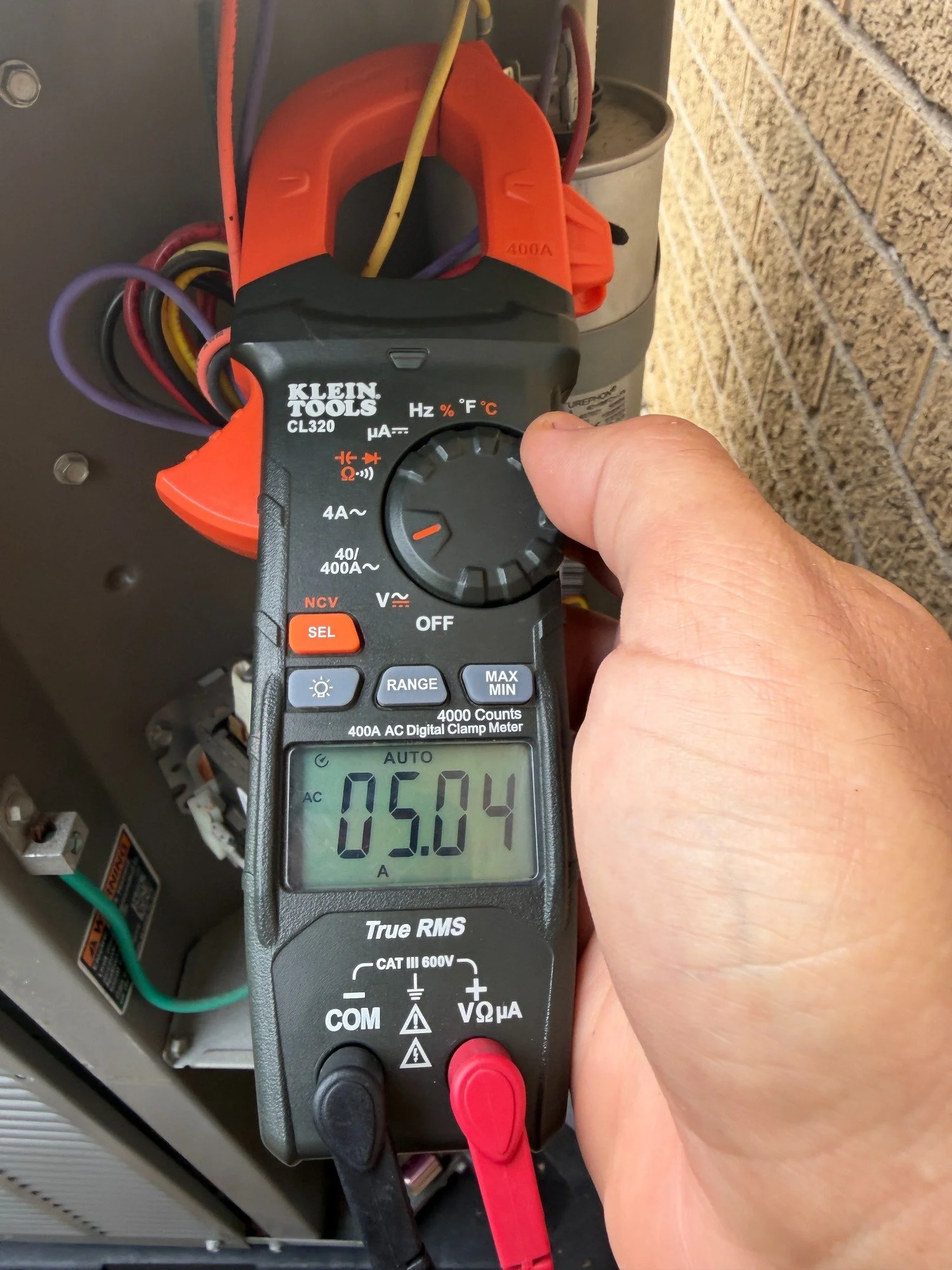
Electrical or control faults can prevent the compressor from operating while air still moves indoors. A failed capacitor or contactor is one possibility—not a diagnosis to make from the sound alone. [2]
The coils can’t transfer heat properly.
Dirt on coil surfaces can impair heat transfer. Ice on the indoor coil is another problem: it is a sign to stop cooling and investigate, not evidence that the system is working especially well. [4][5]
The refrigeration circuit needs attention.
A refrigerant leak or compressor problem can reduce cooling. [1] We measure the system’s operation before recommending refrigerant work or replacing a part. Warm air alone does not tell us what it needs.
One symptom can have more than one cause. Finding a dirty component doesn’t end the diagnosis if the operating problem remains.
You don’t need to keep testing it.
After the safe checks, leave internal testing to a technician. Contact us when cooling remains absent, the outdoor unit won’t run, or operation has changed. [1][2]
- A breaker has tripped? Leave it off for evaluation. Don’t keep resetting it to force another start. [9]
- A new loud grinding or banging noise? Stop cooling at the thermostat if safe and arrange service. Repeating the sound isn’t a useful test. [9]
- Tell us what changed. Note the thermostat setting, rooms affected, airflow, visible ice, and when the problem started.
Call to discuss availability. An online inquiry is not a confirmed appointment.
Turn cooling off. Let the cause be checked.
Switch cooling off at the thermostat and let the ice thaw naturally. Don’t chip it away, pour hot water on it, or use a heater to speed things up. Arrange service to find out why it froze. [4]
Melting the ice is not the same as fixing the problem. Keep clear of water near electrical equipment, and don’t open the coil cabinet to investigate.
A clear photo taken from a safe location can help explain what you saw before the ice melted.
A visible finding. Then an explanation.
These are examples from our field work—not a before-and-after pair. Your equipment needs its own inspection and operating checks.

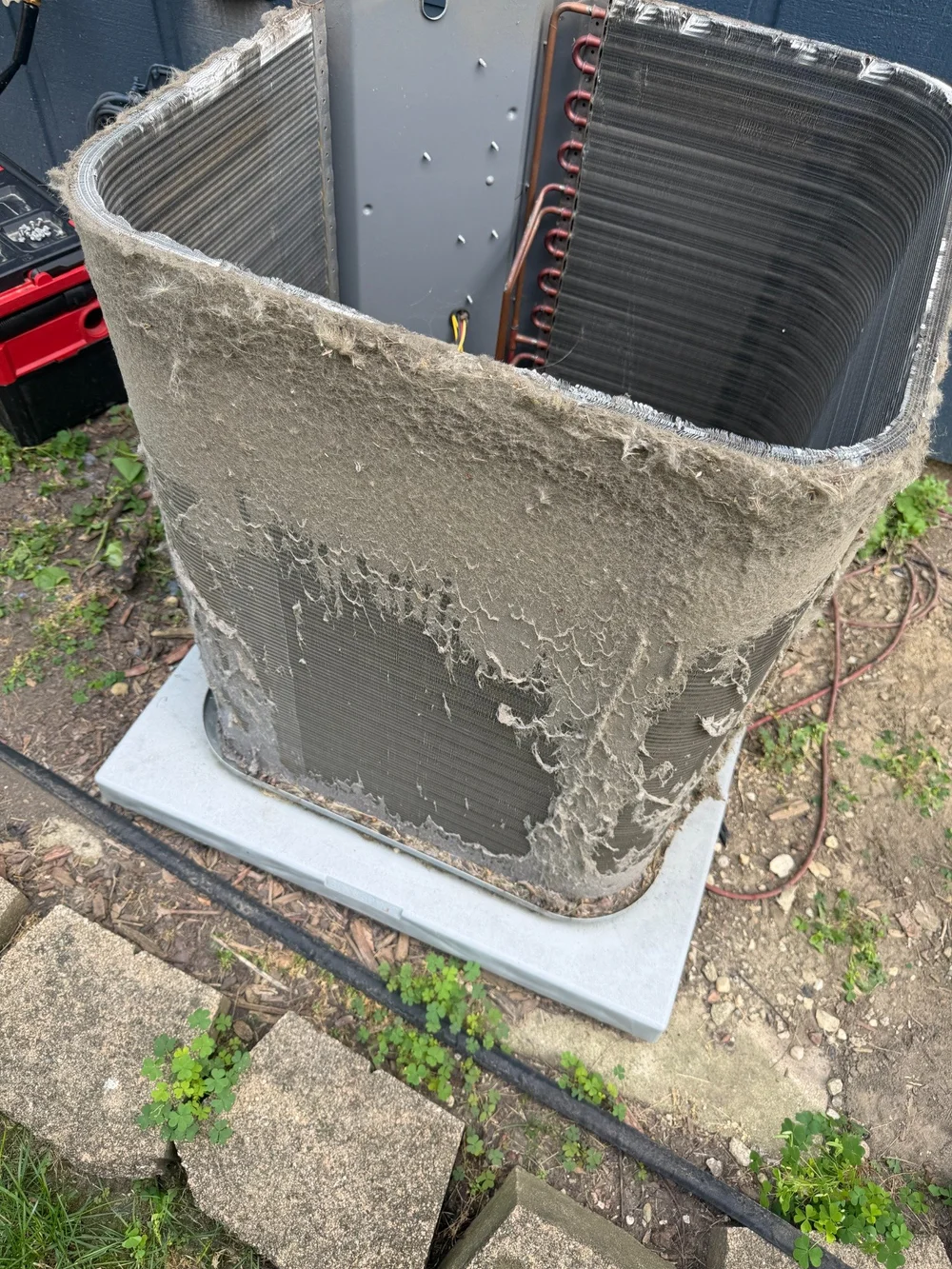
A diagnosis should lead to an explanation.
Listen to the pattern.
We start with when cooling changed, what you’re noticing, and any recent work. A new problem and a long-running comfort issue deserve different questions.
Test what’s relevant.
We check operation and the applicable airflow, coil, electrical, and refrigeration conditions. We’ll explain any limits on what can be tested during the visit.
Explain the next step.
You hear what we found, what the proposed work addresses, and the price before authorizing it. A safe, sensible repair stays part of the conversation.
The question we welcome: “How do you know?”
Ask what the testing showed. Ask what else was ruled out. We want the recommendation to make sense to you—not just sound technical.
A few questions worth asking.
Does warm air mean I need more refrigerant?
No. Settings, airflow, electrical components, coil condition, and refrigerant faults can overlap in how they appear. We’ll establish what the system is doing before recommending refrigerant work. [2]
Can the outdoor fan run while cooling still fails?
Yes. A turning fan does not confirm compressor operation or effective refrigerant circulation. The compressor needs its own evaluation; looking at the fan is not enough. [9]
Does an older air conditioner automatically need replacement?
Not in our approach. We’ll consider the actual failure, condition, safe repair options, parts, costs, and what you need from the equipment. We’ll explain the reasons for repair or replacement rather than make age the entire argument.
What will the repair cost?
We need to understand the problem first. We’ll explain any diagnostic charge when arranging the visit, then discuss the scope and price of proposed work before you approve it. Reading this guide or asking a question does not authorize a repair.
Sources behind this guide
Manufacturer and public-agency references for the technical explanations. Your equipment’s instructions and an on-site evaluation still matter. Links open in a new tab.
- Carrier: why an AC may not blow cold air
- Carrier: warm air, electrical faults, and blower problems
- Carrier: thermostat and fan-setting checks
- Carrier: frozen coils and safe thawing
- ENERGY STAR: filters, coils, and maintenance checks
- ENERGY STAR: equipment sizing, ductwork, and airflow
- Nicor Gas: gas-leak emergency guidance
- U.S. Consumer Product Safety Commission: carbon monoxide alarms
- Carrier: compressor operation and warning signs
Still getting warm air? Let’s find out why.
Tell us what you checked and what you’re noticing. We’ll help arrange the right visit and explain the findings before recommending work.