AC freezing up? Turn cooling off first.
Ice on an AC line or indoor coil is a reason to stop cooling—not a sign of extra cooling power. [1]
We’ll help you separate the immediate step from the actual repair. Start by stopping the ice buildup. Then find out what caused it.
This guide concerns AC icing during cooling. Winter frost on an outdoor heat pump is a different situation, covered in the questions below.
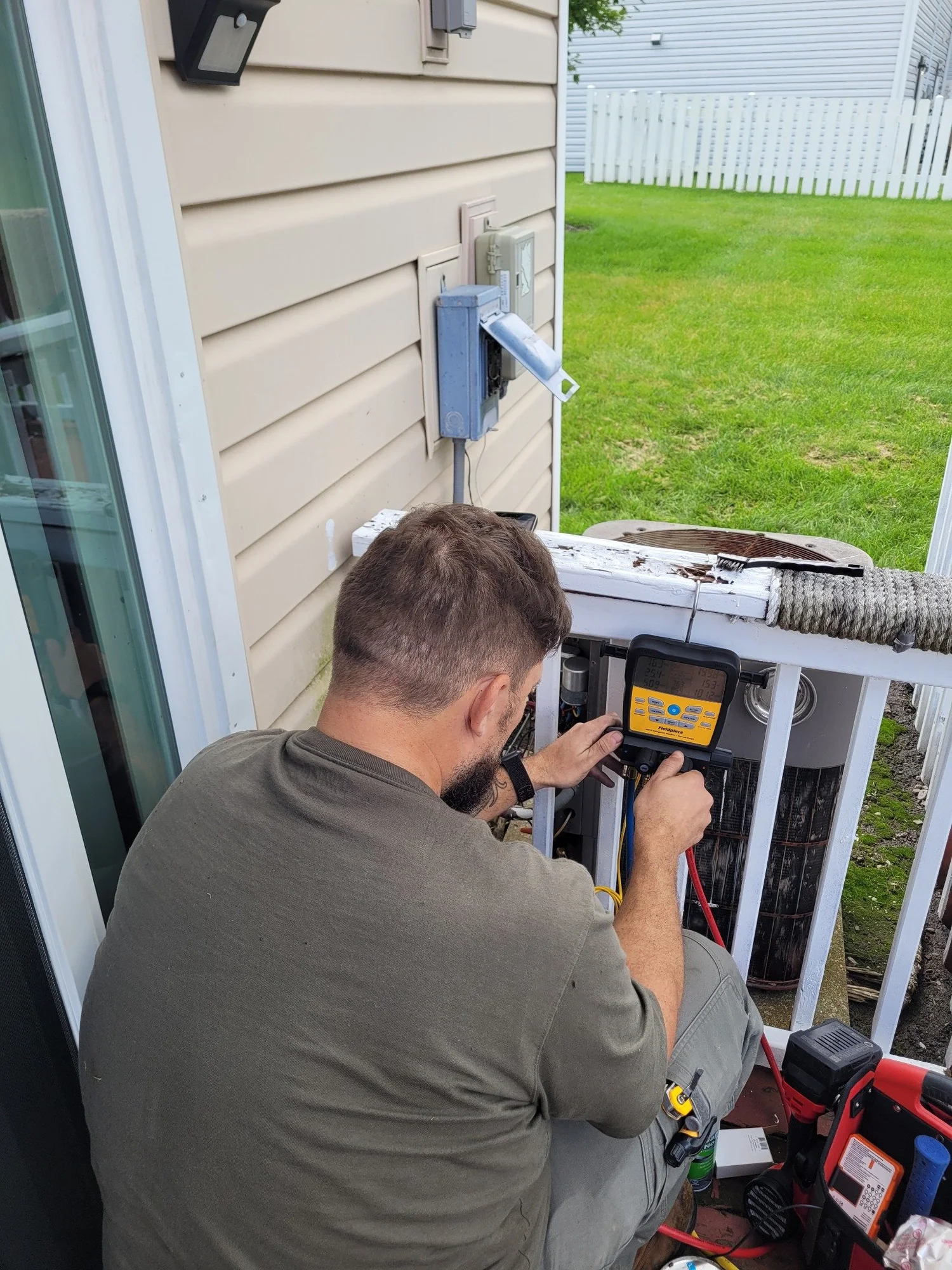
Stop the cooling. Don’t rush the thaw.
The thermostat is the starting point. Leave service panels closed, and skip any check you cannot safely access.
Set the thermostat to OFF.
Change the operating mode from COOL to OFF. Don’t lower the temperature further or keep restarting it. Running with an iced coil can damage the system. [1]
Leave the ice alone.
Let it melt without tools or added heat. Don’t chip or scrape it, pour hot water on it, or use a hairdryer or space heater. Thawing may take several hours. [2]
Arrange the next step now.
You can contact us while it thaws. Tell us where you saw ice, whether airflow changed, and when it started. There’s no need to open the cabinet for a closer look.
What about setting the fan to ON?
With cooling OFF, a normally working indoor fan can move room-temperature air across the coil to help it thaw. Watch for overflow as ice melts. [2]
Don’t use fan-only operation if the blower is not working normally, water has reached electrical equipment, or drainage is overflowing. Leave the system off and get help. You do not need to force airflow to complete the thaw. [5][7]
The coil needs heat from the air moving across it.
The indoor evaporator coil absorbs heat from household air. When its surface drops below freezing, moisture can turn to ice. The issue may be airflow, the refrigeration circuit, or both—not the indoor temperature alone. [1][3]
Too little air reaches the coil.
A clogged filter or obstructed air path can reduce the warm indoor air passing over the coil. That can let its surface become cold enough for moisture to freeze. [3]
The indoor blower is not doing its job.
A blower that stops or cannot move enough air can allow the coil to freeze. Changing a filter won’t fix a failed motor or control. Those need testing. [5]
The indoor coil needs attention.
Dirt on the evaporator coil can restrict airflow and interfere with heat transfer. A clean-looking filter does not establish that the coil behind it is clean. [1][3]
The refrigeration side needs testing.
Low refrigerant can lower evaporator pressure and temperature enough to contribute to icing. Ice alone does not establish low charge; airflow problems can look similar. [3]
We check the system before proposing refrigerant work.
“It’s frozen” describes the symptom. Our explanation should go further: what caused it, what the testing supports, and what correcting it involves.
A few useful checks. No tools required.
These observations belong after cooling has been turned off. You do not have to finish a checklist to call.
Check the filter you normally change.
With the equipment off, follow its instructions for the correct filter size, type, and direction. Replace a dirty disposable filter; don’t open service panels to find it. Regular filter care matters. [4]
A new filter also needs to suit the system—not just have a higher rating. [6]
Keep the air paths open.
Move furniture or rugs covering supply and return grilles. Reopen room registers that were deliberately closed. Don’t close a group of vents to force cooling elsewhere. [3]
Leave internal duct adjustments to the technician.
Tell us about the sequence.
Did airflow fade before you noticed the ice? Was a filter changed recently? Does it happen only at certain times? Those details help us choose what to check—not diagnose it remotely.
Record what you can see without opening it.
Note where the ice appeared, any visible water, and when you turned cooling off. A photo from a dry, safe location is useful. Don’t remove insulation, touch a line, or open the coil cabinet.
Already changed the filter and it froze again? Leave cooling off and arrange a diagnosis. Repeated icing after the basic corrections means there is still something to resolve. [2]
Arrange a diagnosisThawed is not the same as fixed.
Don’t resume cooling with ice still present. Once thawed, an obvious restriction such as a dirty filter may be correctable. Refrigerant or mechanical faults need professional attention. [2]
When the cause is unclear, airflow is still weak, or this has happened before, our recommendation is to leave cooling off and let us check it rather than keep repeating the cycle.
Call to discuss availability. An online inquiry is not a confirmed appointment.
The history helps after the ice is gone.
- Where: an exposed line, cabinet, or another visible location.
- When: when you first saw it and when cooling was stopped.
- What changed: airflow, sound, filter, thermostat settings, or recent work.
- What happened next: visible water or ice that returned after a previous thaw.
You don’t need to make it freeze again to show us the problem.
Look at the condition. Then check the operation.
These are original field photos of a filter and blower assembly. They illustrate things we inspect—not a frozen-system photo or a before-and-after comparison.

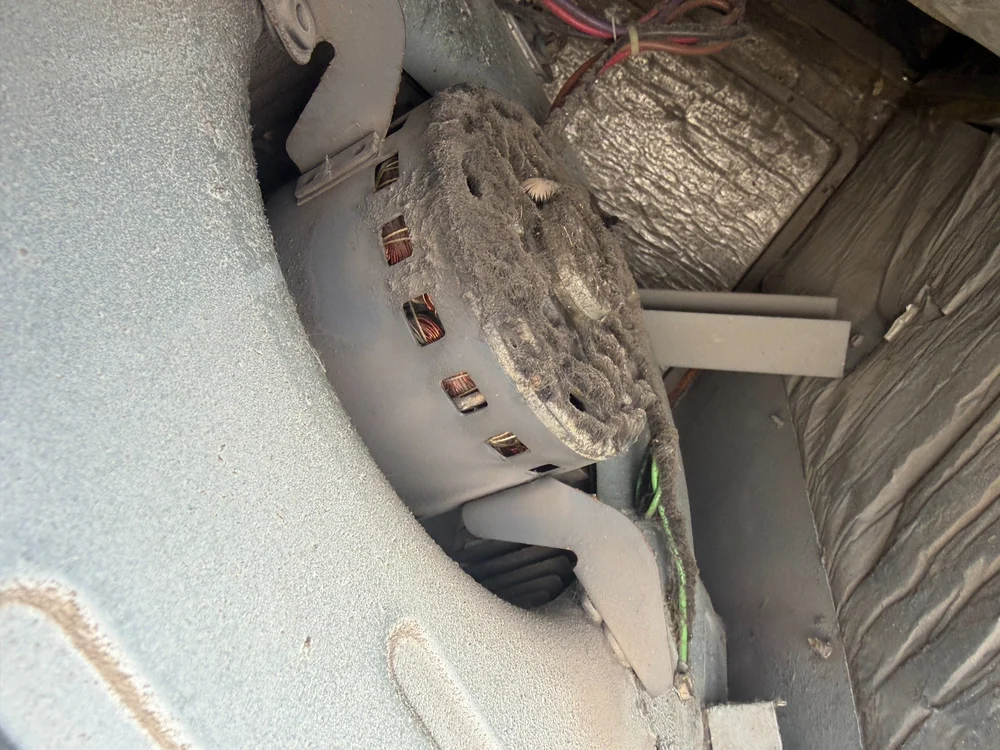
We want to explain why it froze—not just melt it.
Start with the pattern.
We ask about the original complaint, where ice appeared, and anything that changed. Your observations remain useful after the system has thawed.
Check the relevant systems.
We evaluate the air path, blower and coil condition, drainage, and refrigeration operation as appropriate. We explain when ice or other conditions prevent a complete operating check.
Explain the actual correction.
You hear what we found, what the proposed work addresses, and the scope and price before you authorize it. Repair-first means considering a safe, sensible repair—not assuming replacement.
A question worth asking: “What will stop it happening again?”
A recommendation should connect the finding to the problem. We’ll explain that connection, any remaining uncertainty, and what needs checking after the work.
Understand the symptom before choosing a fix.
Does ice automatically mean the refrigerant is low?
No. Airflow restrictions, blower issues, and a dirty indoor coil can also contribute to freezing. Refrigerant work should follow diagnosis, not the appearance of ice alone. [3]
Could changing the filter be enough?
It can help when a clogged filter caused the restriction. Don’t restart with a frozen coil, and don’t assume the problem is solved if ice returns. [1]
Use the filter specified for the equipment. The system must be able to accommodate its airflow resistance and efficiency. [6]
How long should I leave it off to thaw?
There is no single timer that proves every coil is thawed. The amount of ice and surrounding conditions affect the wait; it can take hours. Do not use direct heat to hurry it. [2]
Call while you wait. We’ll discuss the next step without asking you to open equipment to confirm hidden ice has melted.
Does water around the furnace mean the coil froze?
Not necessarily. Thawing can leave water near the indoor equipment, but a blocked condensate drain can also cause leakage. Tell us whether you actually saw ice; water alone does not identify the cause. [1][4]
Stay clear if water may be touching electrical equipment. [7]
Is winter frost on a heat pump the same thing?
No. A light layer of frost on an outdoor heat-pump coil can occur during heating and clear through automatic defrost. Heavy or persistent ice, blocked airflow, or poor heating needs attention. Tell us which mode the system is in. [8]
Sources behind this guide
Manufacturer, public-agency, and electrical-safety references. Your equipment’s instructions and an on-site evaluation still matter. Links open in a new tab.
- Trane: frozen indoor coils, warning signs, and stopping cooling
- Carrier: safe thawing, fan settings, and recurring ice
- Bryant: airflow, blower, and refrigerant causes of freezing
- ENERGY STAR: filter care, drainage, and professional maintenance checks
- Trane: blower problems and when to switch the system off
- EPA: filter ratings and equipment compatibility
- Safe Electricity: keep clear of water around electrical equipment
- Lennox: normal winter heat-pump frost versus problematic ice
Let’s find the cause—not repeat the freeze-up.
Tell us where you saw ice and what changed. We’ll help arrange the right visit and explain what needs attention before recommending work.