AC making strange noises?
A new sound is a clue. It isn’t a diagnosis.
A rattle, buzz, or squeal can be unsettling. Start with what changed, where you hear it, and whether cooling changed too. We’ll help you understand the next step without jumping straight to replacement.
Safe observations for homeowners—not instructions to open equipment or work near moving parts.
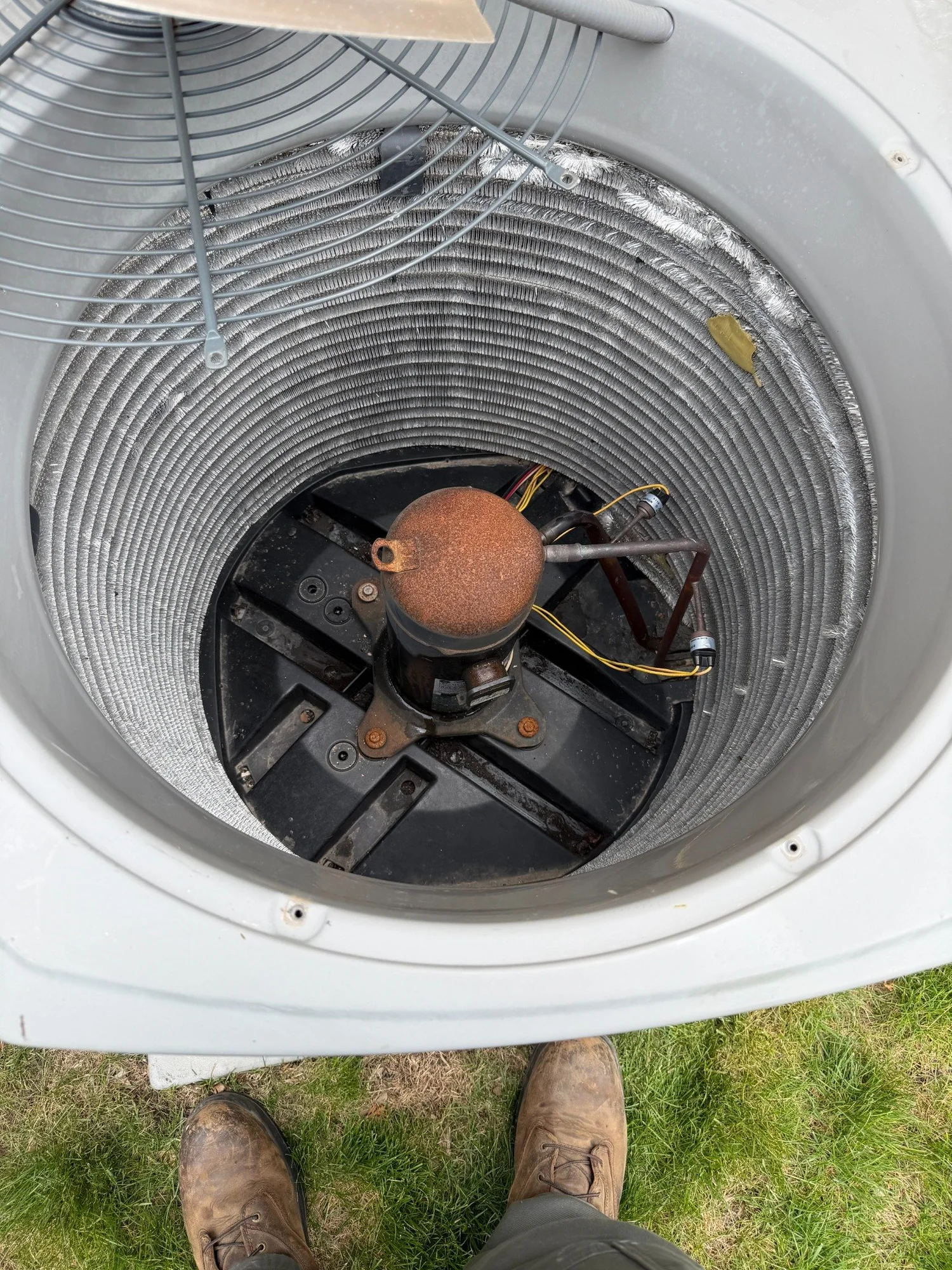
Familiar operation—or something new?
The equipment model and the circumstances matter. Tell us what sounds different from the system you’re used to.
A brief operating sound.
Some systems make expected startup and shutdown sounds. A familiar, brief sound is different from a new persistent noise or a loss of cooling. [1]
The volume rises and falls.
An inverter-driven system may sound different as compressor speed changes. LG documents this as normal on applicable models—not a reason to dismiss every new sound. [2]
It’s louder, harsher, or not working right.
A sudden clank, squeal, or prolonged hiss deserves evaluation. Leave the system off while arranging help rather than letting a new harsh sound continue. [5]
You don’t need to identify a compressor or motor by ear. Describe the sound in everyday words.
The same sound can have different causes.
These examples help you describe a complaint. Testing is what turns the description into a recommendation.
Something may be moving or touching.
Loose fasteners, a fan or blower issue, or vibration can produce a rattle. [1] We’ll inspect the source. Don’t press on a running cabinet, weight it down, or remove its cover to quiet it.
Check the operation, not just the noise.
A hum without startup can involve a capacitor, motor, or power problem. [3] Leave cooling off when it hums but will not start. The sound alone does not tell us which part to replace.
Timing matters.
A repeating click may involve controls, connections, or switching components. [1] Note whether it happens at startup, throughout operation, or with repeated failed starts. Don’t keep cycling the thermostat to reproduce it.
Moving parts need attention.
An indoor blower can make these sounds when parts are loose or motor bearings are worn. [4] New harsh mechanical noise is a reason to stop the system and arrange service—not add lubricant through an opening.
Start with the air path.
A whistle can come from an air-cleaner installation seam; it is not automatically a motor noise. [6] We’ll check filter fit, grilles, and airflow as appropriate. Don’t tape over vents or alter ducts to silence it.
Don’t assume it’s a refrigerant leak.
LG documents some refrigerant-flow sounds as normal on applicable units. [2] But a new, prolonged hiss needs attention. [5] Tell us where and when it occurs; don’t approach the lines to search for a leak.
A sound does not prove a failed part. We’ll explain the inspection and measurements behind the recommendation.
Bring the observations. Leave the tools.
Only make these checks when there is no safety concern. You can call without doing any of them.
Describe what you already heard.
Indoors, outdoors, or at a particular vent? At startup, while running, or after shutdown? Mention whether cooling or airflow changed at the same time. Don’t walk up to running equipment to locate it more precisely.
Check only the filter you normally replace.
With the equipment off, follow its instructions for normal filter access, size, type, and replacement. Leave service panels closed. Basic filter replacement is different from internal mechanical repair. [4]
Tell us if the noise started after a recent filter change; don’t run without the filter as a test.
Keep ordinary air openings clear.
Move furniture, curtains, or rugs blocking supply and return grilles. [1] Note which vent sounds different. Don’t remove grilles to reach into ducts or close other rooms’ vents to chase the noise.
A short clip can help—when it’s safe.
A recording from a safe distance may help us understand your description. Don’t open equipment, reach through a grille, or restart a noisy system to make a video. A written description is enough to begin.
Already have a recording? Mention it when contacting us. We’ll explain how to share it; you do not need a recording to request service.
Arrange a noise checkYou don’t need to keep listening to a failing start.
Our recommendation for a new harsh noise, repeated unsuccessful start, or burning odor is to switch the system off at the thermostat when safe and arrange service. An electrical burning smell calls for attention. [1]
- Humming but not starting, or a tripped breaker: leave it off. Don’t reset a tripped circuit or push a fan blade to try to get it moving.
- A loud new clank, grind, or screech: don’t keep running it to see whether it settles. [4][5]
- The sound continues after thermostat OFF: keep clear and call. Don’t open the cabinet or touch the equipment to stop it.
Call to discuss availability. An online inquiry is not a confirmed appointment.
Quiet does not mean electrically safe.
Thermostat OFF is not electrical isolation. Capacitors can retain a dangerous charge after power is removed. Leave wiring and component testing to a trained technician. [3]
Don’t lubricate a motor, press a contactor, bypass a safety switch, bend tubing, or pack material inside the cabinet to dampen vibration.
Water at electrical equipment? Keep clear. Wet electrical equipment needs qualified evaluation before it is re-energized. [9]
Suspect a gas leak? Leave immediately. Don’t operate switches, use a phone indoors, or try to locate the leak. From a safe location, contact your gas utility or 911. A hiss near a gas appliance is not an AC troubleshooting task. [8]
See what we check. Understand what it means.
These are inspection examples from our work. Neither photo establishes a noise complaint or a failed component.
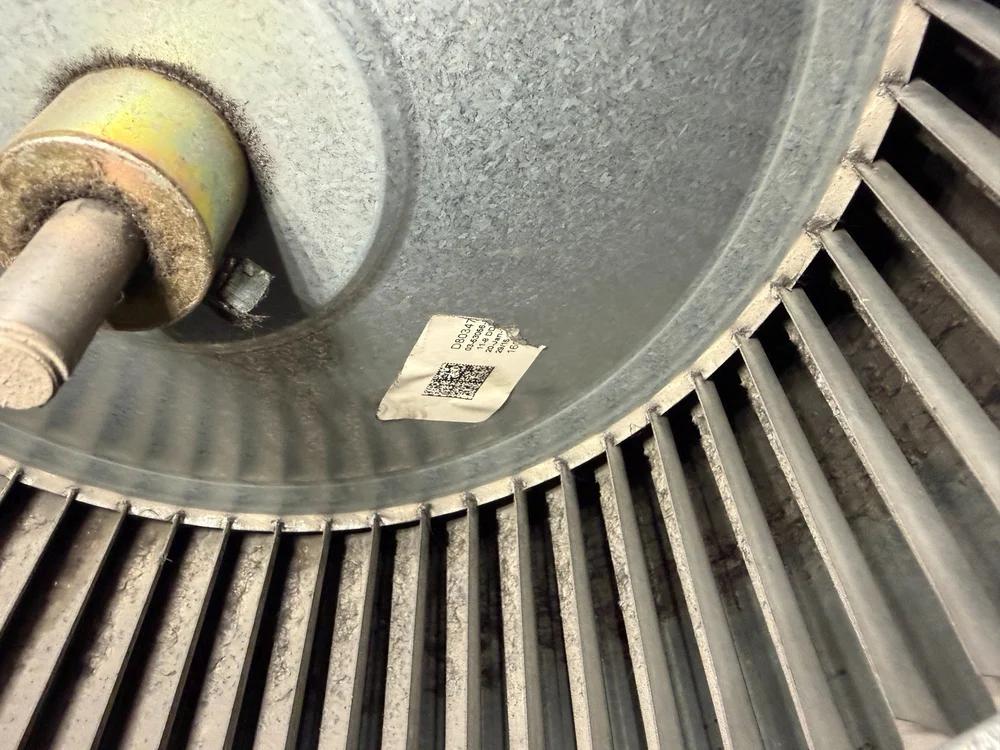
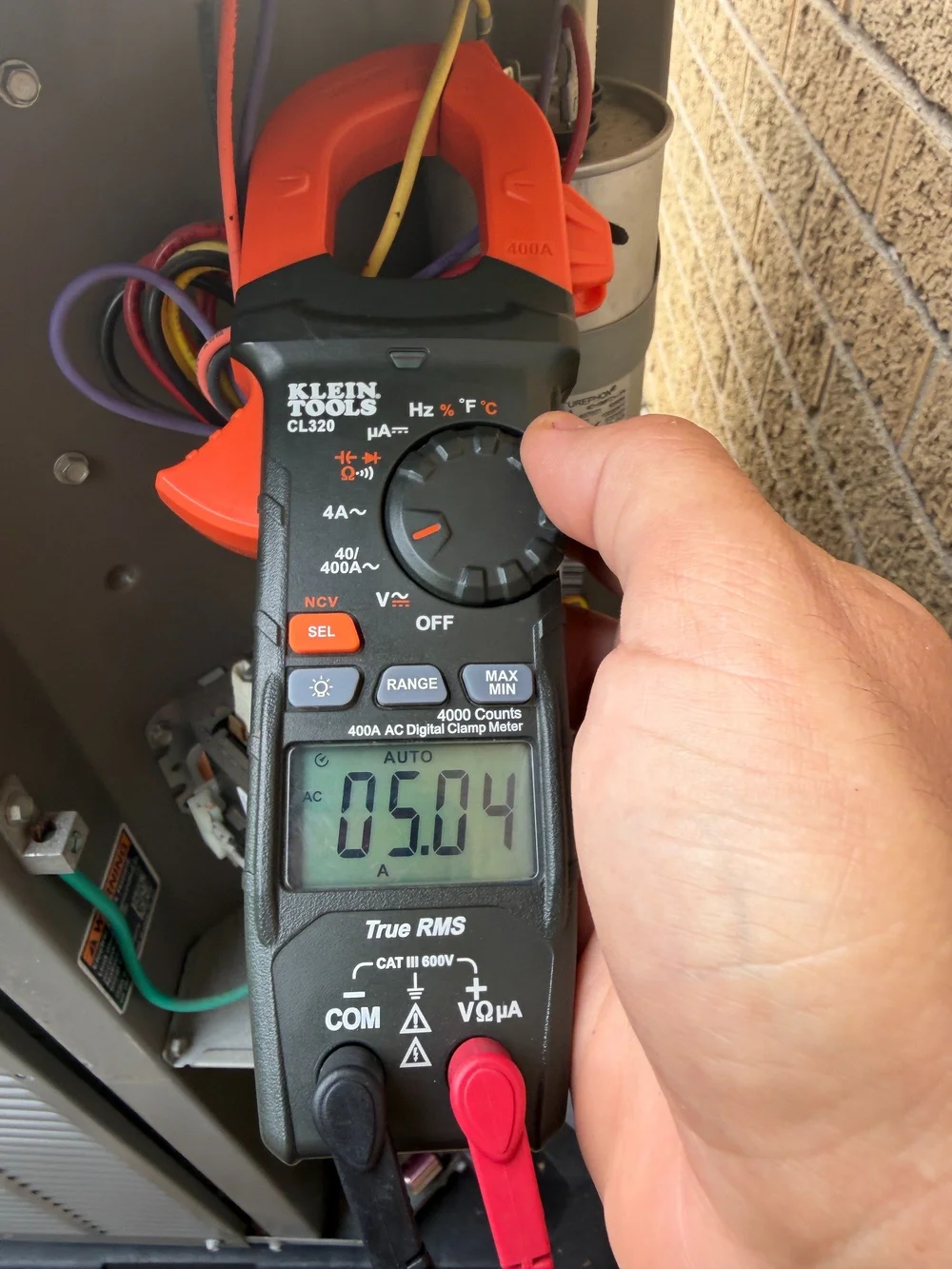
Locate the source. Explain the correction.
Start with the history.
We ask where, when, and how the sound changed. A description or existing recording gives us a starting point without asking you to recreate a problem.
Inspect and measure.
We check relevant mechanical, mounting, airflow, and electrical conditions. Any limits on safely reproducing or confirming an intermittent sound are part of the explanation.
Explain what should change.
You hear what the findings support, the safe options, and the scope and price before additional work. A sensible repair stays part of the conversation.
A useful question: “What did you find that explains the sound?”
We should be able to connect the recommendation to the complaint—not just name the part that often fails or point at the equipment’s age.
Understand the sound before choosing a fix.
Does a startup click always mean something is wrong?
No. Some equipment has expected startup or shutdown sounds. Repeated clicking or a new sound with failed operation deserves a closer look. [1] Describe the change you noticed.
Is a humming unit definitely a bad capacitor?
No. Capacitors, motors, and electrical supply problems can overlap in how a failed start sounds. [3] We test before replacing. Don’t reach through the grille or try to spin the fan.
Why might I hear something after the system stops?
Some equipment has model-dependent expansion or refrigerant-flow sounds; LG documents examples on its units. [2] That is not a blanket explanation for a new sustained hiss, harsh noise, or persistent electrical buzz. Ask us to check an unfamiliar change.
It still cools. Can I ignore a new noise?
Cooling alone does not make a new clanking, squealing, or prolonged hissing sound something to ignore. [5] Follow the stop guidance above and describe what changed. We’ll help determine the next step.
Does a noisy older AC need to be replaced?
Not automatically. We’ll look at the actual source, condition, and safe repair options. You’ll hear the reason, cost, and limits of a proposed repair before deciding whether repair or replacement makes sense.
Sources behind this guide
Manufacturer and safety references for the explanations. Normal operating sounds vary by model; your equipment’s instructions and an on-site evaluation still matter. Links open in a new tab.
- Trane: operating sounds, changes in noise, and professional diagnosis
- LG: model-dependent operating sounds and noises requiring service
- Carrier: fan and electrical faults; stored capacitor charge
- Carrier: indoor blower symptoms and the limits of homeowner repairs
- Lennox: unusual noises and when to switch the system off
- General Filters: air-cleaner whistling and installation seams
- U.S. Fire Administration: leave the building and call 911
- Nicor Gas: suspected gas leaks and emergency precautions
- Electrical Safety Foundation: water-damaged electrical equipment
- Carrier: frozen coils and safe thawing
- Trane: missing indoor airflow and when to stop cooling
Tell us what sounds different.
We’ll help arrange the right visit, explain what we find, and talk through a safe, sensible next step.