AC running but not cooling the house?
It’s running. The house still isn’t comfortable. Let’s look at the whole picture before deciding what needs to change.
Maybe the vents feel cool, but the thermostat never reaches your setting. Maybe one floor struggles while the rest of the home feels fine. Start with that pattern—not a guess about which part to replace.
Safe observations for homeowners—not instructions for internal electrical, duct, or refrigerant repairs.
The whole house—or just part of it?
A running indoor fan does not prove that the compressor is cooling. And a system that makes some cool air can still struggle to bring the home to temperature. [8][1] Tell us which description is closest.
The whole house stays warm.
Note the set temperature, actual room temperature, and whether the vent air feels cool or room-temperature. Tell us whether the change was sudden.
One floor or a few rooms struggle.
Tell us which spaces feel different, whether airflow seems weaker there, and whether closed doors change the pattern.
It falls behind at a particular time.
Does it struggle in the afternoon, after the thermostat was raised, or after a change in how the home is used? Those details help shape the evaluation.
These observations help us choose what to test. They do not establish that the equipment is too small, low on refrigerant, or ready for replacement.
Check the basics without taking anything apart.
Skip anything you cannot safely access. You do not need to finish this checklist before asking for help.
Confirm what you’re asking it to do.
Select COOL with your desired temperature below the room temperature. Check for a schedule overriding it. Use fan AUTO for this check: ON can circulate air between cooling cycles. [2]
Check the filter you normally change.
Switch the equipment off and follow its instructions. Replace a dirty disposable filter with the specified size and type. Don’t remove service panels to find it or run without a filter. A clogged filter can restrict airflow. [3][13]
Leave supply and return grilles clear.
Move furniture or rugs covering grilles. Don’t close a collection of downstairs vents to force more cooling upstairs; blocked or closed vents can disrupt airflow. Leave duct alterations and balancing to a technician. [11]
Reduce avoidable heat coming in.
Close sun-facing blinds or curtains. Notice open windows or exterior doors while cooling. Reducing unwanted heat gain can help, but it is not a repair for equipment that has stopped cooling. [5]
Still not reaching the setting? Note whether the temperature is falling, holding steady, or rising. Tell us the rooms affected, when it started, and what you checked. We’ll help arrange the right visit.
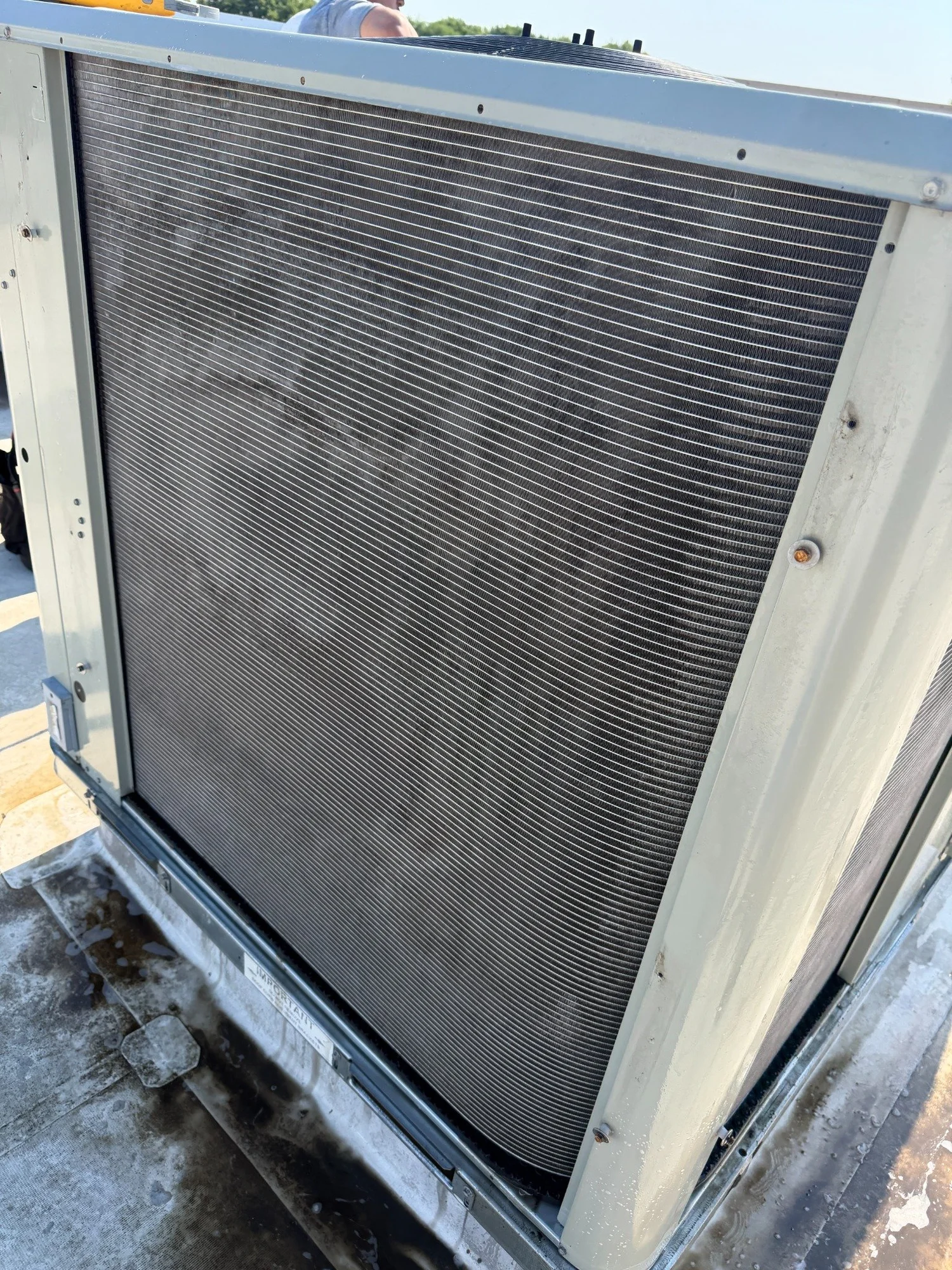
Arrange a performance checkFrom a safe distance, you can also note visible debris around the outdoor unit or ice on an exposed line. Leave the grille and panels in place. Visible ice calls for stopping cooling, as explained below. [12][7]
Cooling has to be made—and delivered.
We consider the equipment’s performance, the route the air takes, and the home it serves. One measurement or one dirty part is not the whole explanation.
The air isn’t reaching the rooms.
Restricted airflow or leaking ducts can reduce delivered cooling. A cold-feeling vent does not tell us how much air reaches the rest of the house. [4] We check the air path before assuming that a larger unit is the answer.
The coils aren’t moving heat well.
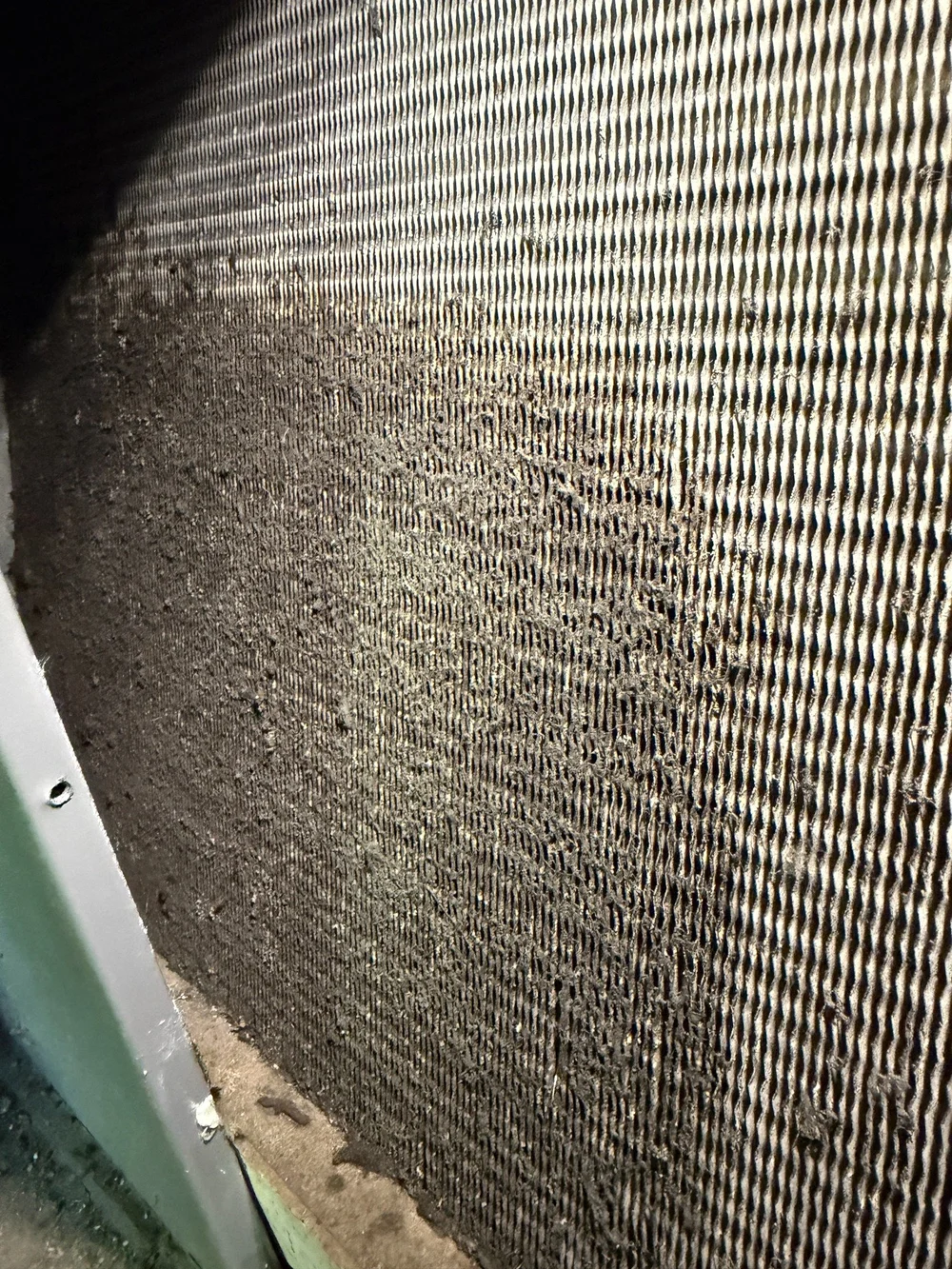
The indoor coil absorbs heat; the outdoor coil releases it. Dirt can interfere with that exchange, leaving the system running longer with disappointing results. [12] We explain the condition and what any recommended cleaning is meant to address.
The cooling circuit needs testing.
Refrigerant problems or a compressor that is not operating properly can reduce cooling even when a fan runs. [13][8] Symptoms do not tell us how much refrigerant to add or which part to change.
The home and system don’t match the demand.
Sun exposure, insulation, and air leakage affect the cooling job. Equipment should be sized for the home’s actual characteristics. [5][4] A longstanding comfort problem deserves that wider look, not just a like-for-like swap.
A new problem and an old problem need different questions. Tell us whether this system used to keep the same rooms comfortable in similar conditions. That history is useful context—not proof of a particular cause.
Don’t keep forcing a system that has stopped cooling.
If cooling is absent after the basic checks, turn cooling off at the thermostat and arrange a diagnosis. Continuing to run a malfunctioning system can make an equipment problem worse. [13]
- A tripped breaker or new loud grinding or banging? Stop cooling if safe, leave a tripped breaker off, and arrange service. Don’t repeatedly restart it to reproduce the problem. [8]
- Still making cool air but falling behind? Call about the change in performance. A long cycle by itself does not diagnose a failure: variable-speed equipment can intentionally run longer at reduced output. [6]
- Bring the pattern, not a diagnosis. Set temperature, actual temperature, rooms affected, time of day, and when it began are enough to start.
Call to discuss availability. An online inquiry is not a confirmed appointment.
Ice is a reason to stop cooling.
Turn cooling off and let the ice thaw naturally. Don’t chip it off, pour hot water on it, or use a heater. Arrange service to identify why it froze. [7]
Keep clear of water near electrical equipment. Don’t open the coil cabinet to investigate.
Thawing is not the repair. Airflow or refrigeration problems can be involved; the cause still needs to be checked. [7]
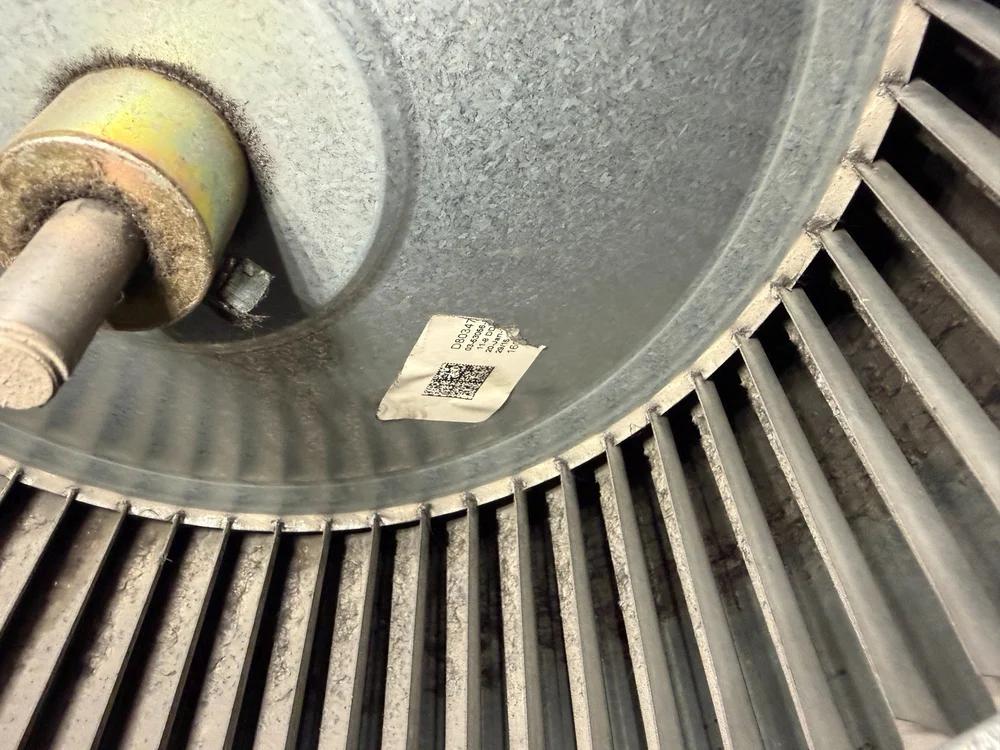
A photo helps explain the finding. Testing adds the context.
These are original photographs from our work—not a before-and-after pair. They illustrate the kinds of details we document, not a diagnosis of your home.
Understand the shortfall before choosing a fix.
Understand the complaint.
We ask when comfort changed, which areas struggle, and what has already been tried. Your experience gives the checks a purpose.
Check the relevant conditions.
We evaluate the equipment and air delivery as the situation calls for. When a check is limited or more information is needed, we’ll explain it.
Explain what the work changes.
You hear what we found, the safe options, and the scope and price before authorizing additional work. Repair remains part of the conversation.
A question worth asking: “What will this change actually fix?”
A recommendation should connect to the problem you called about. We’ll explain that connection—not just point at the equipment’s age or a reading without context.
Long-running AC questions, explained.
Is it always bad if my AC runs for a long time?
No. Variable-speed systems can run for extended periods at lower output to maintain comfort. [6] The question is whether your system is performing as intended. An unexplained loss of comfort, ice, or abnormal noise deserves attention—not a diagnosis based only on minutes of runtime.
The vents feel cold. Doesn’t that mean the AC is fine?
Not by itself. Airflow and duct condition affect the cooling that reaches occupied rooms. We would evaluate delivery and the home’s needs, not declare the whole system healthy because one vent feels cold. [4]
Will setting the thermostat much lower cool the house faster?
For a conventional single-stage AC, a much lower setting does not create extra cooling capacity. Set the temperature you actually want rather than chasing a lower number. [11] If the home is not cooling toward it, tell us what the temperature is doing.
Does this mean I need a bigger air conditioner?
Not automatically. Sizing needs to reflect the home, and oversized equipment can cycle too frequently. Airflow, ducts, and setup also matter. [4] We’ll explain what the evaluation supports before recommending different equipment.
Should we just add refrigerant and see what happens?
No. Low refrigerant is one possible issue, but settings, filters, coil condition, and equipment size can also be involved. [1] We check operation before proposing refrigerant work, then explain what the findings support.
Sources behind this guide
Manufacturer and public-agency references for the homeowner explanations. Your equipment’s instructions and an on-site evaluation still matter. Links open in a new tab.
- Trane: AC running without lowering the indoor temperature
- Carrier: thermostat and fan-setting checks
- ENERGY STAR: filters, coils, and maintenance checks
- ENERGY STAR: sizing, ductwork, and airflow
- U.S. Department of Energy: summer heat, shading, and insulation
- Trane: variable-speed cooling and longer operation
- Carrier: frozen AC coils and safe thawing
- Carrier: compressor operation and warning signs
- Nicor Gas: gas-leak emergency guidance
- U.S. Consumer Product Safety Commission: carbon monoxide alarms
- Trane: thermostat settings and keeping vents open
- Trane: coil condition and cooling performance
- Carrier: causes of lost cooling and when to stop the system
Let’s figure out why your home isn’t getting comfortable.
Tell us what you’re noticing. We’ll help arrange the right visit, explain what we find, and talk through the next step.