AC keeps starting and stopping?
Let’s find out why the cycle ends—not just make it start again.
Repeated, interrupted cooling can be short cycling. But a single short run—or a change in sound—doesn’t establish a fault. The pattern and your comfort matter. [1]
For cooling-mode problems. These checks do not require opening equipment, adjusting wiring, or changing installer settings.
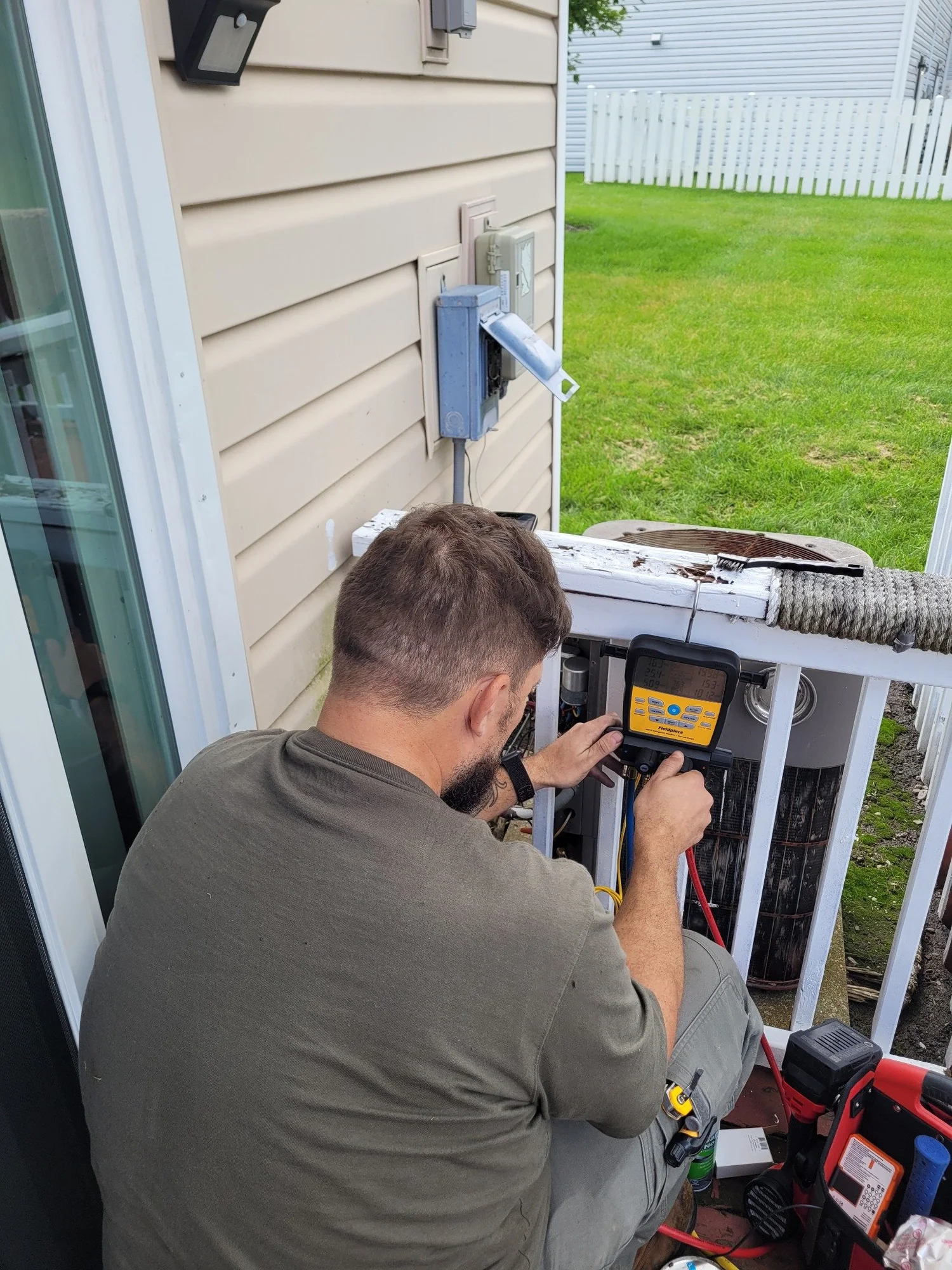
Not every change in operation is a failed cycle.
There isn’t one correct runtime for every home and every day. Start by describing what you’re seeing, whether the room reaches its setting, and whether this behavior is new.
It stops when the cooling need is met.
A conventional system can cycle off when the thermostat is satisfied. Mild weather may call for less cooling than a hot afternoon. A shorter run is not automatically a breakdown. [1]
The sound or airflow changes.
Variable-speed equipment can run longer at lower output and adjust its operation. A quieter sound may be a capacity change—not the whole system switching off. [2]
Tell us what you noticed rather than trying to identify the compressor by sound.
It stops and retries without settling.
Repeated abrupt shutdowns, little progress toward the setting, or a new start-stop pattern deserve evaluation. Frequent abnormal cycling can add wear and affect humidity control. [3]
We won’t diagnose the equipment from a stopwatch alone. You don’t need to keep a malfunctioning system running to collect more examples.
A few useful checks. No equipment to take apart.
Only proceed when there is no safety concern. Skip anything you cannot safely reach or aren’t comfortable doing. Calling us does not require completing a checklist.
Check the request and the room reading.
Note the operating mode, desired temperature, actual temperature, and any schedule changes or displayed message. A thermostat fault or misleading temperature reading can affect its cooling request. [1]
Leave wiring, calibration, and installer-menu adjustments to the technician.
Look at the filter you normally change.
With the equipment off, follow its instructions for accessible filter replacement. Use the specified size and type. Don’t remove service panels to look for it, and don’t run without a filter. A clogged filter restricts airflow. [5]
Keep room grilles unobstructed.
Move furniture, rugs, or curtains blocking supply and return grilles. Reopen room registers that were deliberately closed; don’t block other rooms to force a longer cycle. [2]
Notice where airflow feels different. Leave duct adjustments to the technician.
Bring the recent history.
Did this begin after a thermostat replacement, service visit, outage, or equipment change? Have the rooms felt more humid? Is it constant or only at certain times?
Still repeatedly starting and stopping? Our recommendation is to leave cooling off and arrange a cycling check rather than keep trying resets. Tell us what you observed before switching it off.
Arrange a cycling checkDid it finish the job—or was it interrupted?
That difference guides the diagnosis. We want to connect the shutdown to what the controls and equipment were doing at that moment.
The cooling request is changing.
A thermostat, sensor, or control problem can interrupt the request. Location matters too: a thermostat affected by sun, a nearby register, or a heat source may not represent the rest of the home. [1]
Airflow or coil conditions need attention.
A restricted filter, blower issue, or dirty indoor coil can interfere with airflow and contribute to icing. That can accompany a cooling problem, but not every restricted system will shut itself off. [6]
We check the actual operating pattern instead of assuming that a dirty filter explains everything.
A component or protection is interrupting operation.
Electrical controls, wiring, motor problems, or abnormal refrigerant conditions may interrupt operation. On equipped systems, a protective shutdown may be a response to the problem—not the failed part itself. [3][7]
We identify why it stopped before deciding what should be repaired.
Capacity and the home may not be a good match.
Oversized equipment can cycle too frequently. Sizing should consider the home’s actual characteristics, along with airflow and installation—not just the old unit’s label. [4]
A sizing concern deserves evidence. It is not an automatic reason to replace equipment during a service call.
Short cycling is not a refrigerant diagnosis. We won’t add refrigerant or replace a thermostat simply to see whether it changes the behavior.
Don’t keep forcing another cooling cycle.
If the system repeatedly cuts out and retries, leave cooling off and arrange service. A one-time short run with a comfortable house is a different situation from ongoing failed starts.
- A breaker has tripped or it hums without starting: leave it off for evaluation. Don’t reset the breaker or reach through the grille to push a fan. [7]
- Visible ice: stop cooling and allow natural thawing. Don’t chip the ice, apply heat, or restart before the cause is understood. [6]
- The pattern is new but the cause is unclear: describe what happened. You don’t need to reopen the equipment or repeat the fault for a video.
Call to discuss availability. An online inquiry is not a confirmed appointment.
What happened before it stopped?
- Temperature: the thermostat setting and room reading.
- Timing: approximate on and off periods you already observed.
- Operation: whether indoor airflow continued when the outdoor sound changed.
- History: when it began and any recent changes or messages.
A note or safe photo of the thermostat is enough to start. Leave disconnects, control compartments, and safety switches alone.
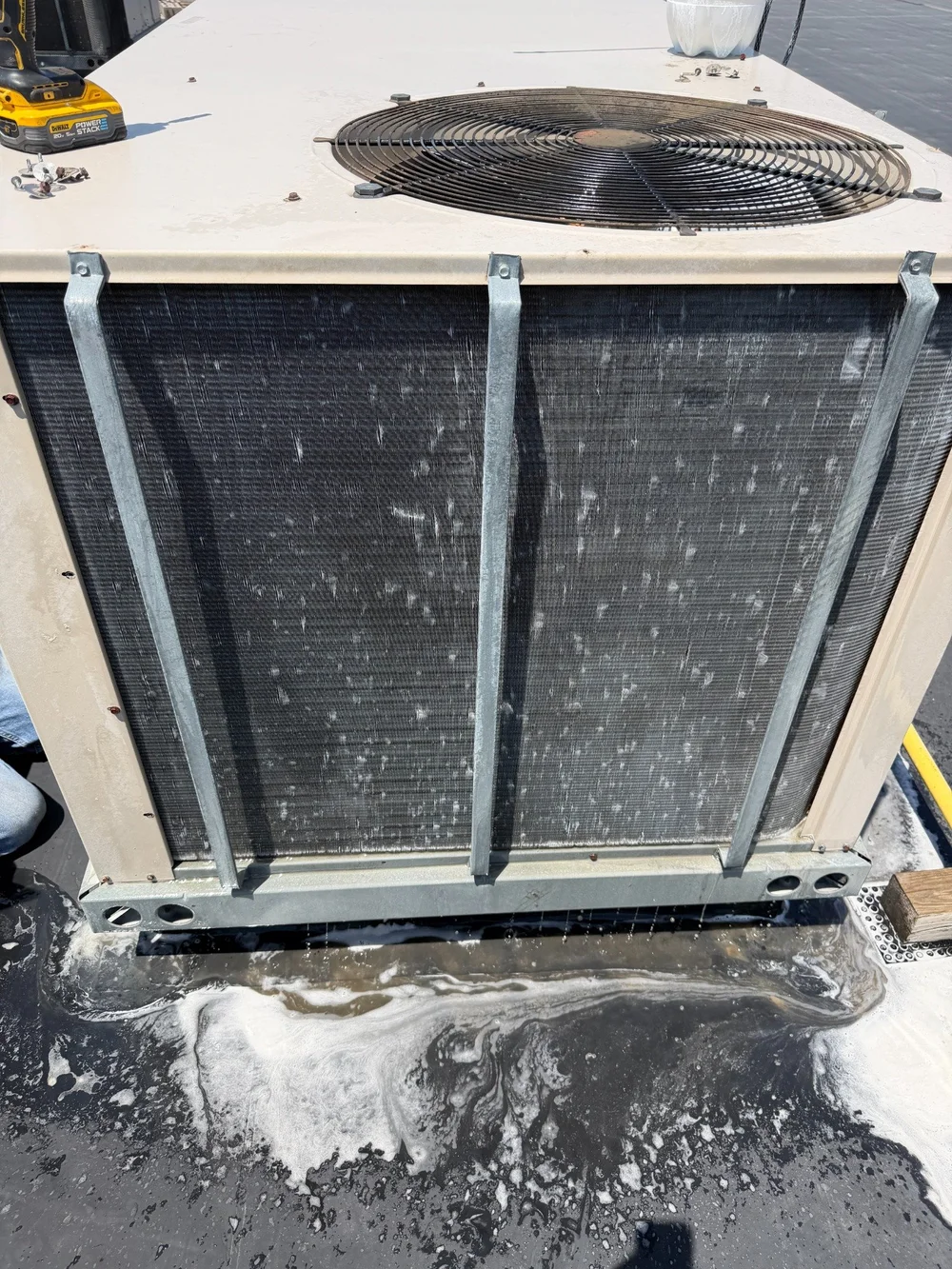
The condition is a clue. The operation adds context.
Original photographs from our field work. These are examples of things we inspect and maintain—not proof that either pictured system had a short-cycling fault.

Find the interruption. Don’t just reset it.
Understand what actually stops.
We ask about the pattern, room temperature, thermostat display, and recent changes. We distinguish the cooling request from the equipment’s response.
Test the relevant conditions.
We evaluate the applicable controls, electrical operation, airflow, coils, and refrigeration conditions. Any limits on the checks are part of the explanation.
Explain the correction.
You hear what the findings support, the safe options, and the price before additional work. After an authorized repair, we check operation and explain anything that still needs attention.
A useful question: “Did the thermostat stop asking, or did the equipment stop responding?”
We’ll explain what the testing showed and why the recommended work addresses it. The goal is a reason you can understand—not just a longer list of parts.
Understand the pattern before choosing a repair.
How many minutes should a normal AC cycle last?
There is no single number that diagnoses every system. Weather, cooling demand, thermostat control, and the equipment design affect operation. Look at the repeated pattern and comfort—not one timed run. [1]
Could the thermostat be causing it?
Yes. Incorrect sensing or a control problem can change when cooling is requested. [3]
Tell us whether the thermostat was changed recently. Don’t move it, bridge wires, or alter installer settings as a trial fix.
Does short cycling prove that the AC is oversized?
No. Oversizing is one possible explanation, but controls and operating faults also need consideration. [3][4]
We’ll evaluate the system before recommending a capacity change. Equipment age alone is not the explanation.
Would replacing a capacitor or adding refrigerant fix it?
Either could be relevant to a diagnosed fault, but neither is a universal correction. Electrical components and refrigerant problems are among several possible causes. [3]
Testing comes first. We’ll explain what is supported and what still needs checking.
Is a quieter variable-speed system short cycling?
Not simply because its sound changes. Variable-speed equipment can reduce output and keep running for an extended period. [2]
A new loss of comfort or repeated shutdown still deserves attention. Tell us about that change rather than relying on sound alone.
Sources behind this guide
Manufacturer, public-agency, and electrical-safety references. Your equipment’s instructions and an on-site evaluation still matter. Links open in a new tab.
- Trane: normal cycle variation, thermostat location, and short cycling
- Trane: variable-speed operation and keeping air paths clear
- Carrier: short-cycling causes and the effects of repeated starts
- ENERGY STAR: equipment sizing, airflow, and installation quality
- ENERGY STAR: filter care, coil condition, and operating checks
- Carrier: frozen coils and safe thawing
- Carrier: control, wiring, motor, and protective-shutdown problems
- Electrical Safety Foundation: water-damaged electrical equipment
- U.S. Fire Administration: home fire escape guidance
Let’s find out why the cycle keeps ending.
Tell us what you noticed. We’ll help arrange the right visit, explain the findings, and discuss a safe, sensible next step.