HVAC installation. The right fit for your home.
A new furnace or AC should come with a clear explanation—not a rushed decision. We’ll help you understand whether replacement makes sense, what your home needs, and what the work involves.
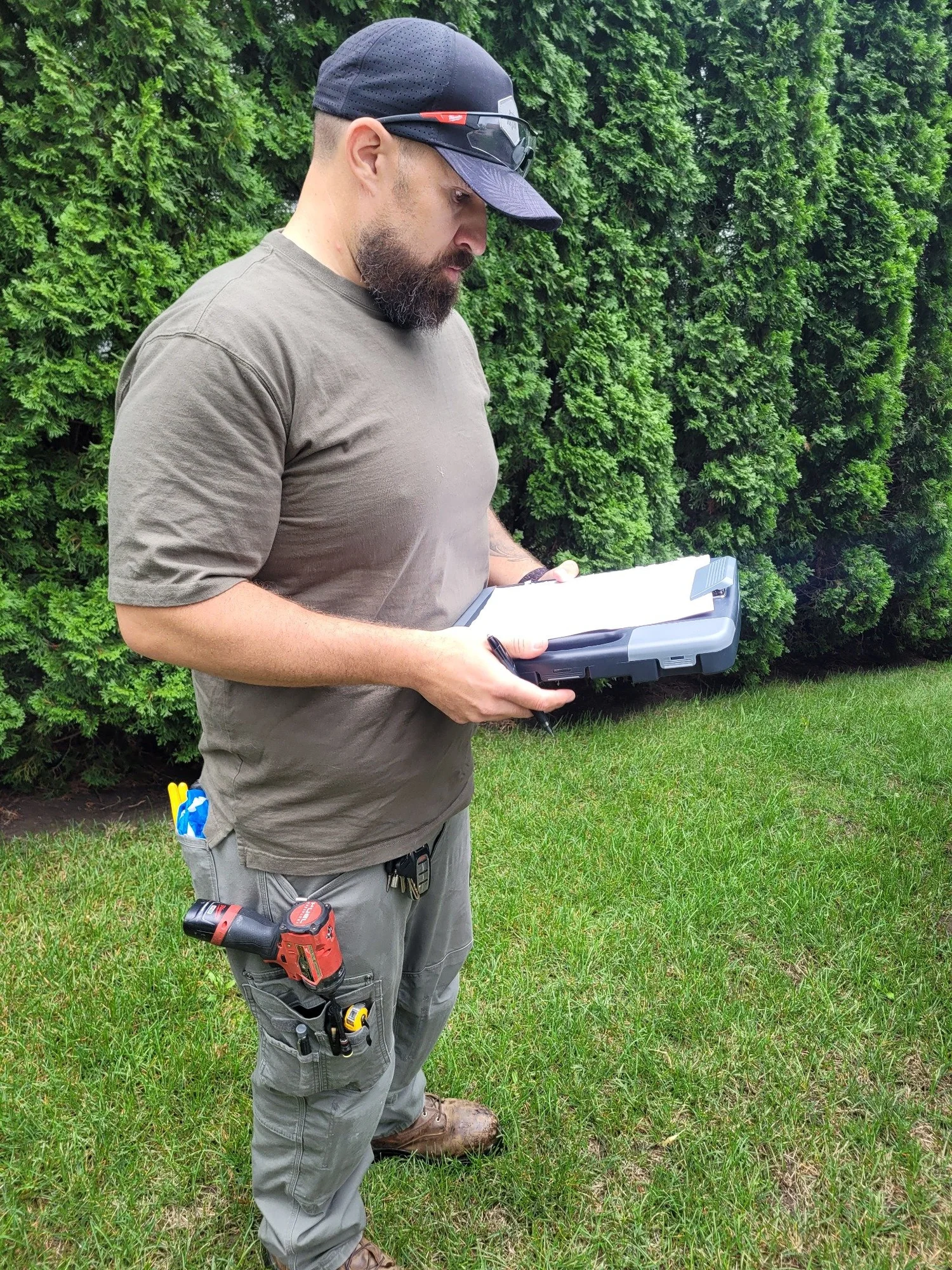
Replacement is an option. Not our starting assumption.
An older system, a repair quote, or an uncomfortable room can start the conversation. None of those should end it before we understand the situation.
Something stopped working
Start with a diagnosis. We’ll explain whether a safe, reasonable repair is available and what its costs and limits look like.
Ask about a diagnosisYou’re planning ahead
You want to compare options before making a decision. We’ll talk through the equipment, scope, and priorities without inventing urgency.
Compare equipment optionsThe house never feels right
Tell us which rooms struggle and what you’ve already tried. We’ll include those problems in the evaluation—not just swap the equipment and hope.
Understand system sizingThe installation matters as much as the equipment choice.
Sizing, airflow, equipment matching, and setup are part of a quality installation—not details to leave until after the equipment arrives. [1][2]
Your home’s actual needs
The equipment size should reflect the home’s heating and cooling load, not just square footage or the old unit’s label. Bigger is not automatically better. [1]
The path the air takes
Supply ducts, returns, leakage, and airflow can affect the result. We’ll explain any air-delivery changes recommended with the new equipment. [1]
Parts that work together
The proposed components must be a suitable combination. Airflow, refrigerant setup where applicable, and operating checks belong in the installation plan. [2]
The practical installation
We’ll discuss equipment access, placement, controls, electrical needs, and venting or drainage where applicable. You should know what the project involves before approving it.
We won’t promise a fixed bill reduction, a particular installation time, or an identical solution for every house.
A clear scope. Not just a price.
We’ll walk through what the proposed work includes, what it does not include, and why we recommend it. Questions are welcome before you decide.
Comparing another proposal? Bring it along. We’ll help you compare the equipment and scope without assuming the lowest—or highest—number tells the whole story.
See the installation processWhat we’ll clarify in the proposal
- The equipment and controls being proposed.
- What is being removed, reused, or changed.
- Included duct, electrical, venting, drainage, and refrigerant-line work.
- Any permit or inspection coordination included in the scope.
- Startup checks, cleanup, and the handover.
- Equipment coverage, labor coverage, and registration responsibilities.
The written proposal defines your project. This list is not a promise that every type of work or warranty is included in every installation.
A straightforward path through the project.
Understand the home
We listen to what you want to improve, evaluate the relevant equipment and conditions, and discuss whether repair or replacement is the right next step.
Agree on the plan
You review the proposed equipment, scope, price, and terms. We confirm timing and preparation once the work is approved.
Install and check
We perform the agreed work and check operation against the equipment’s installation requirements. Any condition that limits testing is explained.
Show you the system
We explain the controls, filter access, and care requirements. You’ll know what documentation to keep and how to reach us with questions.
The details deserve an explanation.
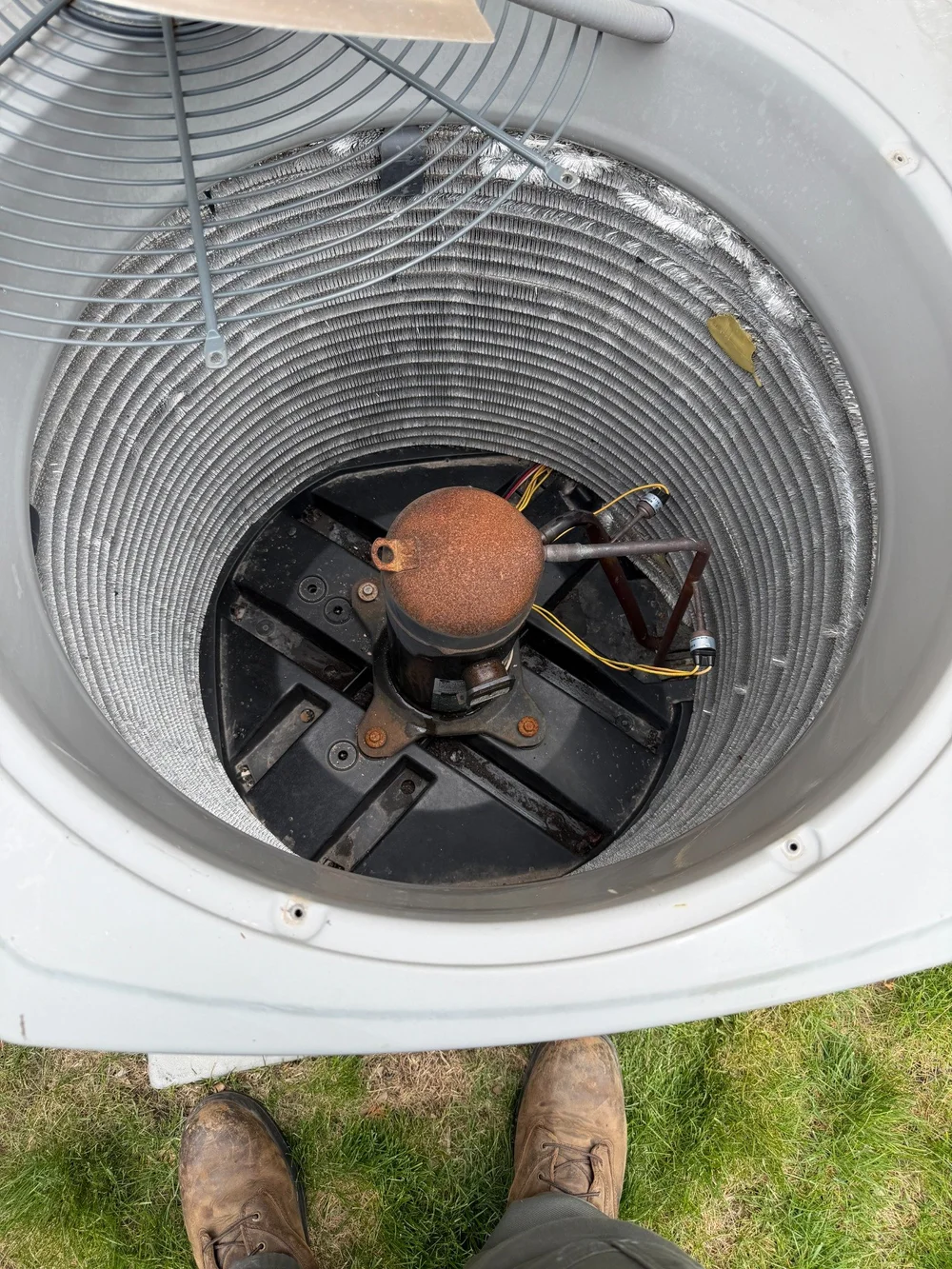
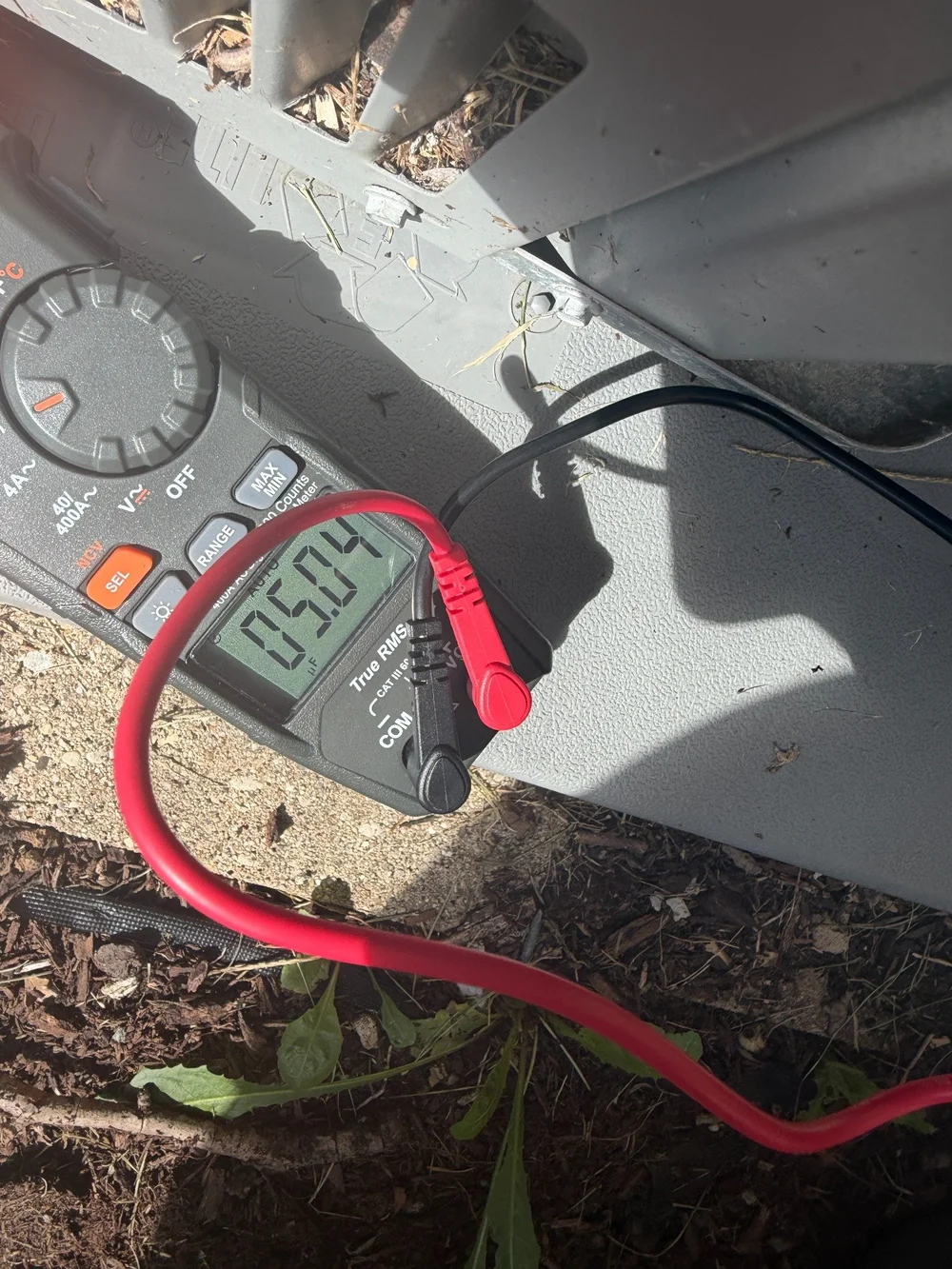
These photos show inspections and measurements from our service work. Looking at the existing equipment helps us explain what we found and what needs further evaluation.
Understand the decision before making it.
Select a question to open its answer.
Do I have to replace a system just because it is old?
No. We’ll consider the actual condition, failure, available repair options, cost, and your goals. We won’t use age alone as the explanation. A safe, sensible repair remains worth discussing.
Would a larger unit fix rooms that stay uncomfortable?
Not automatically. Oversized equipment can cycle too often, while airflow or duct problems may remain. The home’s needs and air delivery should be evaluated before changing capacity. [1]
Do the furnace and AC always need to be replaced together?
No automatic rule makes them a package. What stays depends on condition and compatibility with the proposed equipment. We’ll explain the matching requirements rather than assume that every component needs replacement. [2]
Can I keep my existing ductwork?
It may be suitable, but condition and airflow need to be checked. We’ll identify any recommended changes and show them in the scope instead of assuming that new equipment will fix an existing air-delivery problem. [1]
Can a mini-split serve just an addition or one part of the house?
Yes, ductless systems can be designed for selected spaces. The room layout, equipment size, and indoor-unit placement affect what area is served. We’ll discuss the intended coverage before selecting a system. [4]
How long will installation take, and what should I prepare?
We’ll discuss the project-specific schedule and access needs after reviewing the job. Equipment changes, site conditions, and the agreed work determine the plan. Keep access arrangements and any expected heating or cooling interruption part of that conversation.
What warranty comes with the installation?
We’ll explain the manufacturer’s equipment coverage, any registration requirements, and the labor or installation coverage included in your proposal. The written terms control; this page does not promise a universal warranty length or unlimited coverage.
Does asking about replacement commit me to buying?
No. Start with the questions you have. We’ll explain the next step and any charges before arranging work. You decide whether to proceed after you understand the options.
Homeowner reference links
Let’s make the next step a clear one.
A repair, a replacement, or a plan for later—we’ll explain what makes sense for your home without rushing the decision.